Dose of Nature's involvement in the new national network MARCH


A new national network MARCH 

Dr Daisy Fancourt at the Institute of Epidemiology and Health Care at UCL has been awarded a £1.25m grant to lead a new national network, MARCH, focusing on community resources that support mental health and wellbeing. The network proposes that Assets for Resilient Communities lie at the centre of Mental Health (M-ARC-H), and aims to increase our understanding of how social, cultural and community assets can enhance public mental health and wellbeing, prevent mental illness and support those living with mental health conditions.

Its launch meeting was held on November 8th, 2018, at the Royal Society of Public Health, and brought together 100 researchers, charity and community groups working in practice across the UK. For more information, visit https://www.marchnetwork.org.

Dose of Nature has been invited to be part of a MARCH special interest research group on natural environments and mental health, and will be working together with other academic, community and charitable organisations to promote research into the mental health benefits of spending time in natural spaces. 


Dose of Nature hosts MARCH meeting in the Herbarium at the Royal Botanical Gardens at Kew

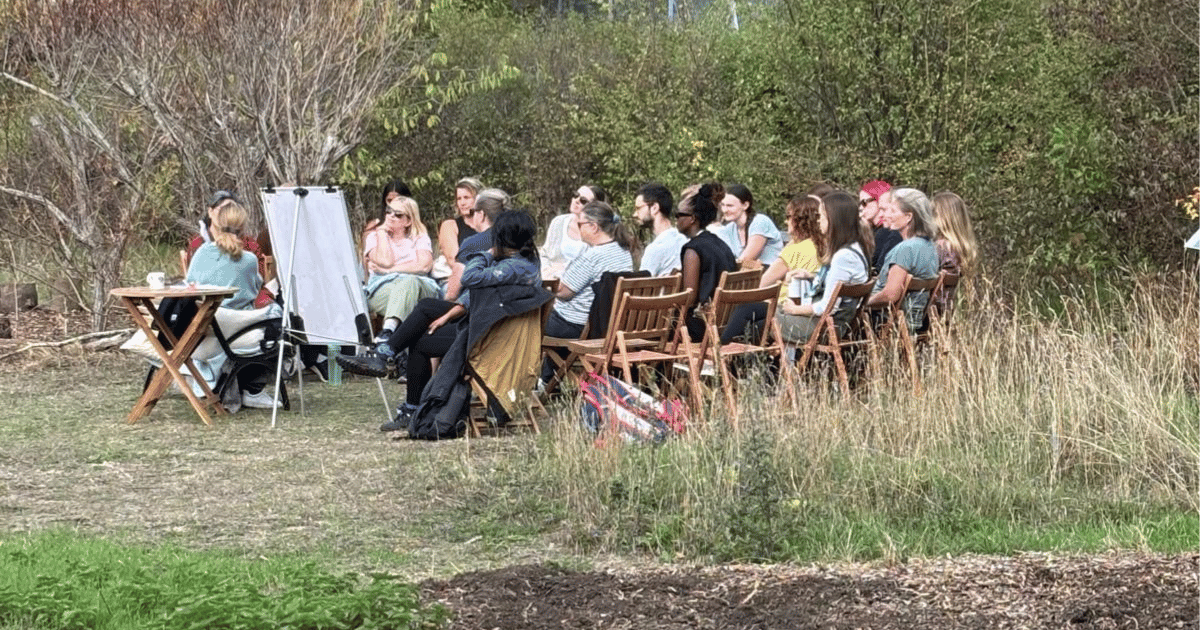
On 2nd April, Dose of Nature hosted the first meeting of the Nature, Outdoors, and Mental Health Special Interest Group (part of the national MARCH network) at Kew Gardens. Academics, practitioners and representatives from Natural England and the local community attended to discuss potential new research projects regarding nature and mental health. 

We are hugely grateful to Kew Gardens for their hospitality in allowing us to hold our first meeting at Kew. 


June 1, 2026
We are delighted to share that the Chimo Trust has made a substantial new grant to support the next stage of Dose of Nature’s development, with a particular focus on expanding access for young people experiencing mental health challenges. We first began working with Chimo Trust in 2022, and from the outset they recognised both the urgency of the mental health crisis facing young people and the potential for nature-based interventions to play a meaningful role alongside existing services. At Dose of Nature, we believe that many people fall into the gap between early emotional distress and the threshold for specialist NHS support. Our nature prescriptions are designed to offer an accessible, non-stigmatising and evidence-based intervention that helps people reconnect — with themselves, with others and with the natural world. Over recent years, we have continued to build the evidence base for this approach, including through a randomised controlled trial conducted with the London School of Economics and Political Science. Our outcomes have consistently demonstrated levels of recovery and improvement that outperform average national talking therapy benchmarks, while delivering support in a way that feels more human, preventative and accessible. This new funding from Chimo Trust will support the development of our partnership model, enabling us to work alongside organisations across the UK to deliver Dose of Nature prescriptions for young people in both clinical and community settings. The aim is not only to expand access, but also to help build a scalable model that can support earlier intervention and long-term wellbeing in more communities. The timing of this support is particularly important. The recent interim report from the UK Government’s review into young people’s mental health highlighted the growing need for “earlier, less intensive and more accessible forms” of support beyond specialist clinical services. We believe nature-based interventions can play an important role in that future — especially when they are evidence-based, clinically informed and delivered through trusted community partnerships. We are hugely grateful to Chimo Trust for their continued belief in our work and for helping us take this next step toward making nature-based mental health support more widely available to the young people who need it most.
May 14, 2026
As part of Mental Health Awareness Week, the Dose of Nature team attended the wellbeing fair at Kingston College, joining staff and students in conversations about mental health, wellbeing and the importance of accessible support. Throughout the event, we spoke with students about their emotional wellbeing and some shared how the pressures of exam season were affecting them. Together, we explored simple ways to support mental health during stressful periods, including spending time outdoors and connecting with nature. Research shows that time in nature can help restore focus and attention, reduce feelings of stress and improve mood – all of which can be particularly valuable during periods of study and revision. Students were also invited to take part in a creative activity, designing their own nature-inspired decorations. These personalised keepsakes provided a fun opportunity for reflection and served as a reminder to take regular breaks, get outside and reconnect with the natural world. We were pleased to share information about Dose of Nature's services and to remind both students and college staff that young people aged 16–25 can self-refer to our service. Those interested in finding out more can learn about eligibility and access support through our young people's self-referral page . Thank you to Kingston College for welcoming us to the wellbeing fair and for helping to create space for important conversations about mental health. We enjoyed meeting so many students and sharing practical ways that nature can support wellbeing during challenging times.
March 26, 2026
On 13 March 2026, The Guardian featured the work of Dose of Nature as part of a wider story on how nature-based therapy is supporting people living with mental illness. For many participants, the impact has been profound. One described the experience simply as “it has changed my life,” while others spoke about feeling calmer, more connected, and better able to cope. At Dose of Nature, our work is grounded in the belief that mental healthcare should be integrated, preventative, and community-based. Nature-based therapy is not about replacing existing services, but strengthening them — offering clinically led, evidence-based support that works alongside traditional care. Our recent randomised controlled trial with the London School of Economics found that structured nature prescriptions can significantly improve outcomes for anxiety and depression, while also reducing costs. These findings reflect what participants already know: that time in nature, when guided and purposeful, can play a meaningful role in recovery. As the Guardian article highlights, this approach is gaining recognition not just for its impact, but for its potential to reshape how mental health support is delivered in the future. We are incredibly grateful to the participants, clinicians, partners and funders who are helping make this work possible. Read the full article to learn more about the people and stories behind this growing movement.
More Posts